

 EN

Kaixin は、ポリマーパイプラインバルブの研究開発、生産、販売を専門とするハイテク企業です。
Field Notes on Flow Control
The PVC Ball Valve Handle: Small Part, Outsized Consequences
Ninety degrees of rotation decides whether a chemical line stays contained. What we have learned about plastic ball valve handles, stem connections, and the failures that stop a process.
A ball valve is judged in a fraction of a second. A quarter turn, and a line carrying acid, brine or plating solution goes from flowing to sealed. The part that carries that decision from your hand to the ball is the handle, a moulded piece of polymer that costs very little and quietly determines whether the valve opens on demand or shears off in your palm at two in the morning.
We have been making plastic valves, pipe and pumps for corrosive service since 1999. The questions we receive about handles almost always arrive after something has gone wrong, and they are nearly always about fit. This guide is an attempt to move that conversation earlier.
What the Handle Actually Does
A ball valve does its work in a quarter turn. The ball rotates ninety degrees, its bore lines up with the pipe, and flow begins; turn it back and the seats seal against the ball. Everything in that sequence depends on torque travelling cleanly from your hand, through the handle, down the stem, and into the ball.
The handle is therefore three things at once: a lever, a position indicator, and a maintenance interface. The lever part is obvious. The indicator part is quietly important, because a lever sitting across the pipe usually reads as closed and a lever in line with the pipe usually reads as open, and crews take that in at a glance from ten metres away. The interface part matters when the line has to be locked out, when an extension stem is needed, or when an actuator replaces the hand entirely.
What the handle is not is a crowbar. Almost every broken stem we have seen came from someone adding length to a handle that was already asking for help.
Handles, Stems and the Fit Between Them
The handle itself is usually a glass-filled polypropylene or ABS moulding, sometimes nylon on larger sizes. Good ones carry a UV stabiliser, because a lever that spends five years outdoors will chalk, fade and eventually crack at the hub if the compound was chosen on price alone. On corrosive duty the material also has to tolerate splash and fumes, not just the medium inside the pipe.
Common stem connections
- Square drive: the most common pattern on small and mid-size plastic ball valves, and the bore usually wears round before the stem does.
- Double flat: two machined flats on a round stem, where the flat width matters as much as the diameter.
- Splined: fine teeth that spread torque, though a stripped spline usually means the stem assembly needs attention too.
- Keyed with a retaining nut: the nut sets preload on the stem seal, so tighten it to the maker's figure rather than to feel.
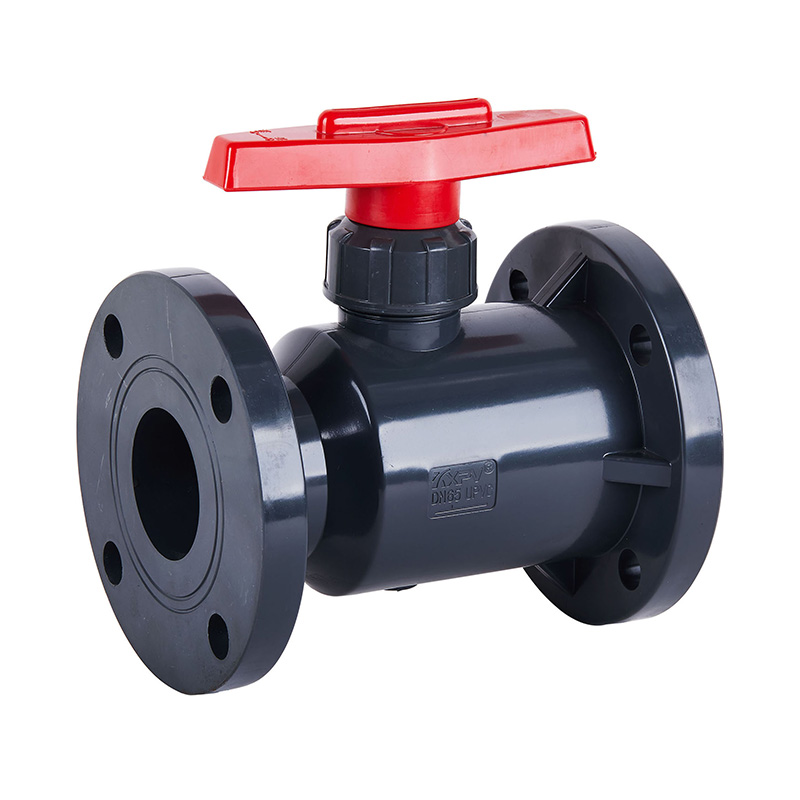
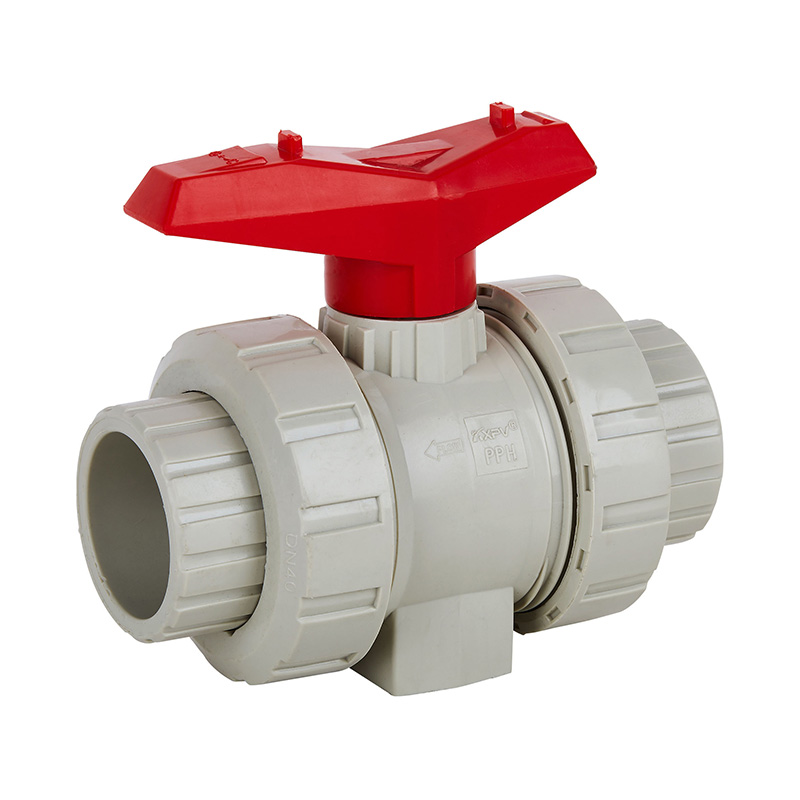
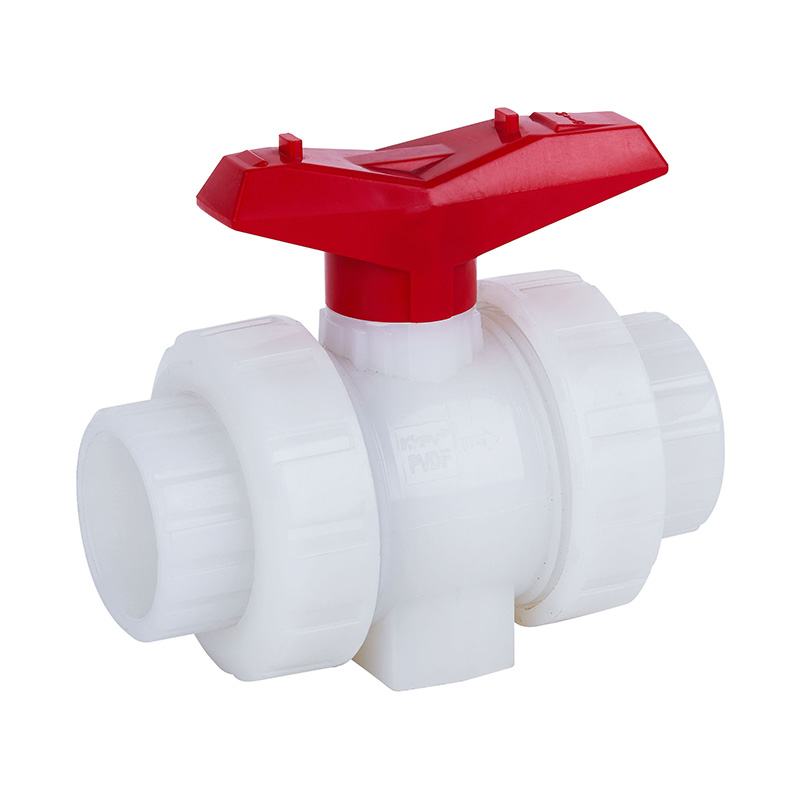
Handles are held on by a stem nut, a snap cap, or a single bolt through the lever. Before ordering a replacement, note the stem shape, the across-flats dimension, the lever length and the valve size. On our own UPVC socket ball valves, lever, stem and body are matched as a set, which is why we prefer to quote them together.
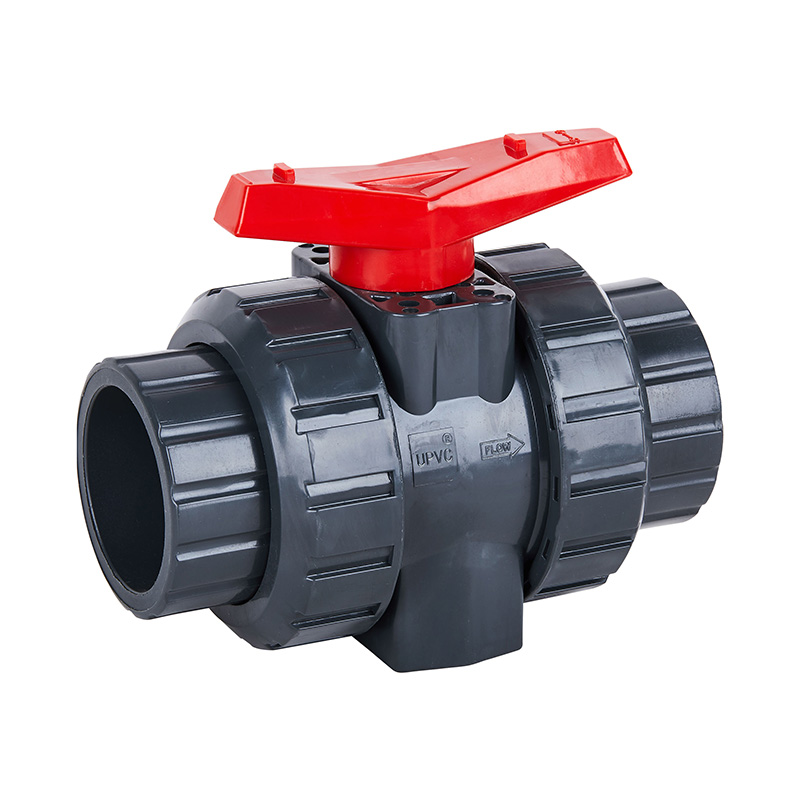 PVC-U Socket Ball Valve DN15–DN100Manual PVC-U socket valve for acid-duty piping, with matched lever, stem and body as a set across DN15–DN100.View Product →
If you are still at the selection stage rather than the repair stage, the plastic ball valve series shows how body style, union arrangement and operator type are grouped across the range.
When a Handle Fails: Reading the Warning Signs
Handles rarely fail without warning. The trick is knowing which warning you are looking at.
- The lever turns but the valve does not, which points to a rounded bore or a twisted stem.
- A wobble at the hub, from a worn bore or a loose stem nut.
- A crack radiating out from the hub, usually over-torque or UV embrittlement.
- A chalky, faded surface with fine crazing, meaning the polymer has lost its stabiliser.
- The lever will not hold position, from worn internal stops or a ball loaded by differential pressure.
- A soft or sticky feel, which often signals chemical attack near fume extraction.
WarningNever extend a stubborn handle with a pipe or a bar. A cheater bar multiplies torque far beyond the stem's design limit, and a snapped stem turns a five-minute job into a drained line, a cut-out section and a shutdown.
Repair or Replace? An Honest Calculation
When a handle breaks, the instinct is to replace the handle. That is often right, since a lever is inexpensive and swapping it takes minutes when the stem is sound. But the decision should rest on the stem and the seats, not on the lever alone.
If the stem turns freely by hand with the lever removed, replace the lever. If it does not, the problem was never the handle.
Three checks settle it. Grip the bare stem with the correct tool and turn it through its full quarter. Look for sideways play, which means worn bearings or a loose packing nut. Then consider the medium: a valve left closed in a crystallising or scaling service may need the ball cleaned before any handle will feel normal again.
Good to knowOn union-body valves the ball and stem assembly can often be serviced without cutting pipe. On one-piece bodies, a failed stem usually means a new valve.
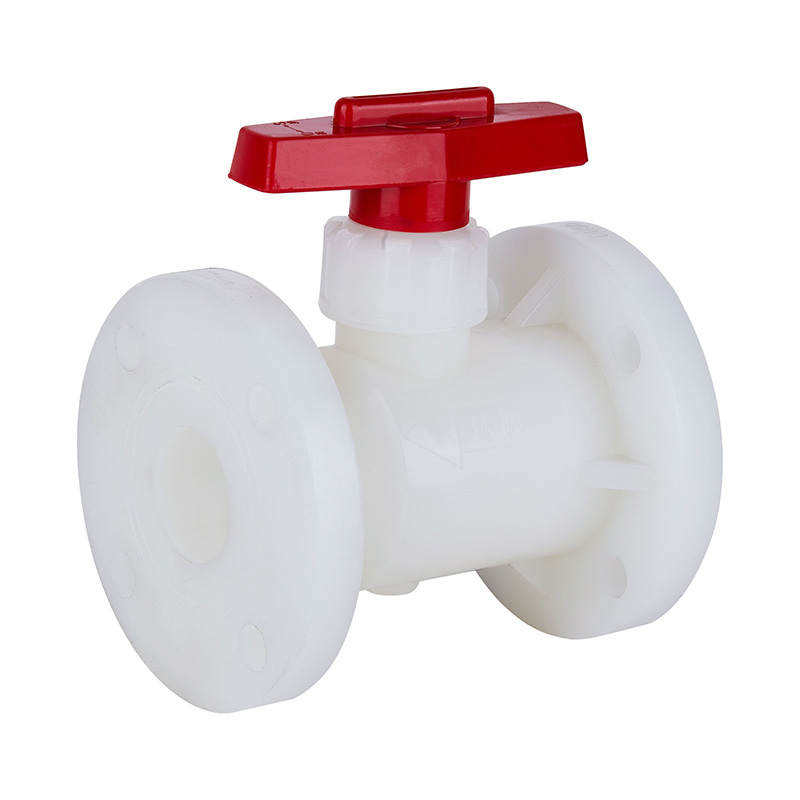
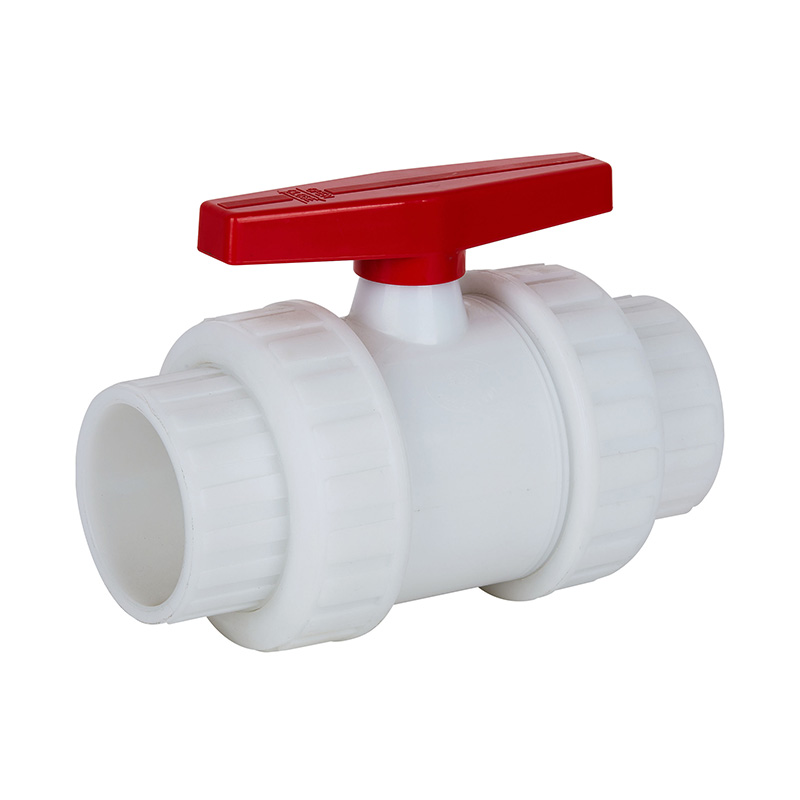
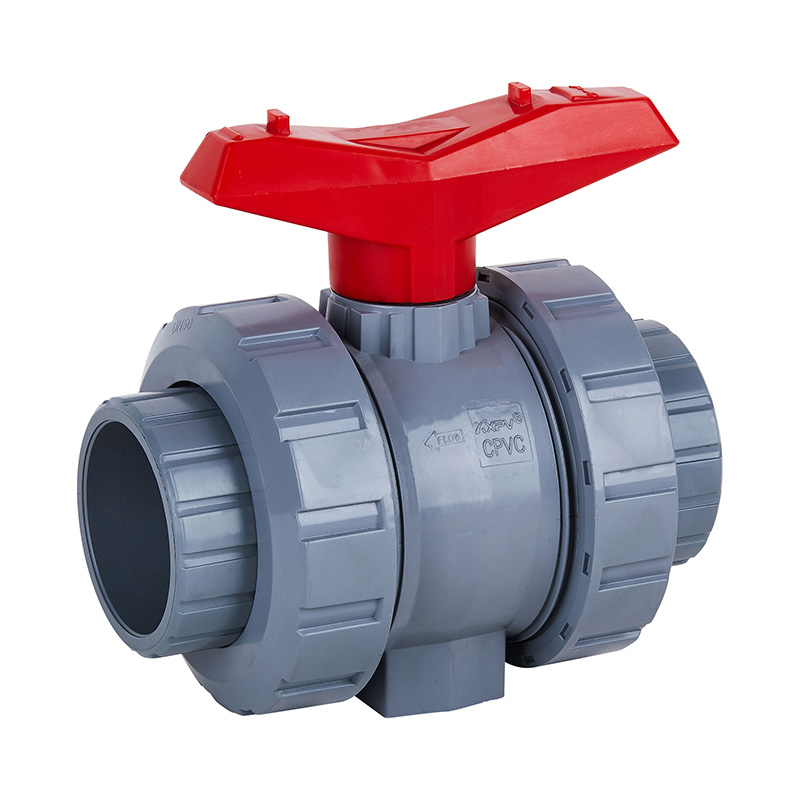
Flanged double-union patterns are the ones we see serviced most often in plant rooms, because the union nuts let a fitter open the body in place.
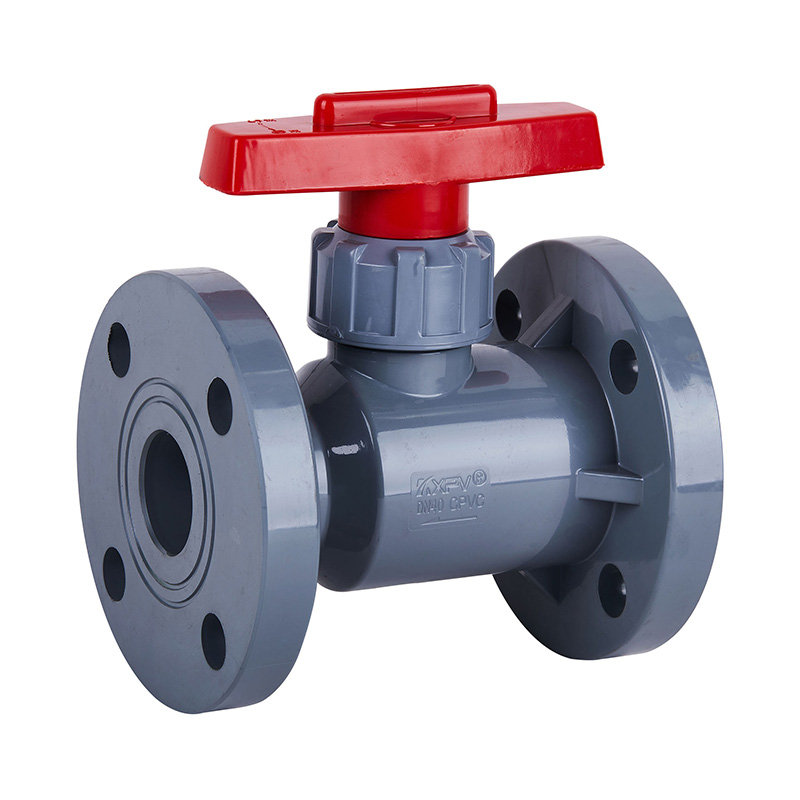
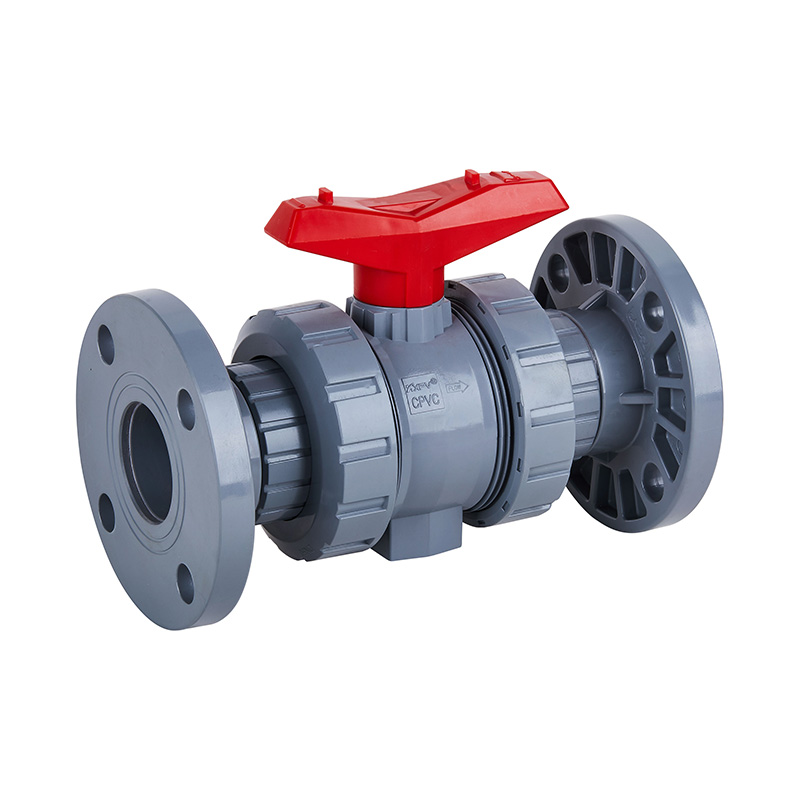 PVC-C Flanged Double-Union Ball Valve DN15–DN100Flanged double-union PVC-C ball valve with adjustable PTFE seat and double O-rings, suited to plant-room service where unions allow in-place body access.View Product →
Matching the Operator to the Duty
Operator choice is usually settled by three questions: how big is the valve, how often is it cycled, and does the line need to be locked out?
| Operator type | Typical sizes | Where it earns its keep | Points to watch |
|---|---|---|---|
| Lever handle | DN15 to DN100 | Manual isolation and daily line switching | Torque rises with size and pressure drop |
| Lockable lever | DN15 to DN50 | Maintenance isolation points | Padlock clearance and visible position |
| Geared hand wheel | DN80 and above | Large valves needing mechanical advantage | Slower operation and extra space |
| Electric actuator | DN15 to DN300 | Remote or automated dosing lines | Power supply, ingress rating, fail-safe position |
| Pneumatic actuator | DN15 to DN300 | Fast cycling and hazardous areas | Air quality and spring-return setup |
For most manual isolation duty between DN15 and DN100, a lever remains the right answer. Above that, torque and reach start to argue for a geared or actuated solution.
Installation and Everyday Care
Fitting a replacement handle is simple, but a few habits keep it working.
- Isolate and depressurise the line, then cycle the valve once to confirm it moves freely.
- Clean the stem flats or splines, since grit under a handle bore accelerates wear.
- Compare the new bore with the old one before fitting, because a millimetre of slack becomes a wobble within a month.
- Seat the handle fully, then tighten the stem nut to the maker's torque rather than to feel.
- Cycle the valve twice and mark the open position if the lever has no physical stop.
In good orderA handle that seats fully with no rocking, turns with steady resistance and stops crisply at both ends is doing its job. If any of those three feels wrong, stop and recheck the fit.
Extensions, Lockout and Automated Alternatives
Two situations push a handle beyond its design brief: buried or insulated lines, and automation.
For buried lines, an extension stem with a remote lever or a floor box keeps the operator at grade. Insulated lines need a stand-off long enough to clear the cladding, otherwise the lever fouls and the valve is never fully opened. Both are easy to specify at the ordering stage and awkward to retrofit.
For lockout, a drilled lever with a padlock hole is worth specifying on any line that crews isolate regularly. A lever without a hole invites a clamp, and a clamp invites a shortcut.
Take careDo not remove a handle from a valve holding pressure in a live line, and never treat lever position alone as proof of isolation. Verify at the downstream gauge or drain.
Automated ball valves replace the lever with a pneumatic or electric actuator, which is the sensible step when a line is cycled dozens of times a day or sits somewhere nobody wants to reach.
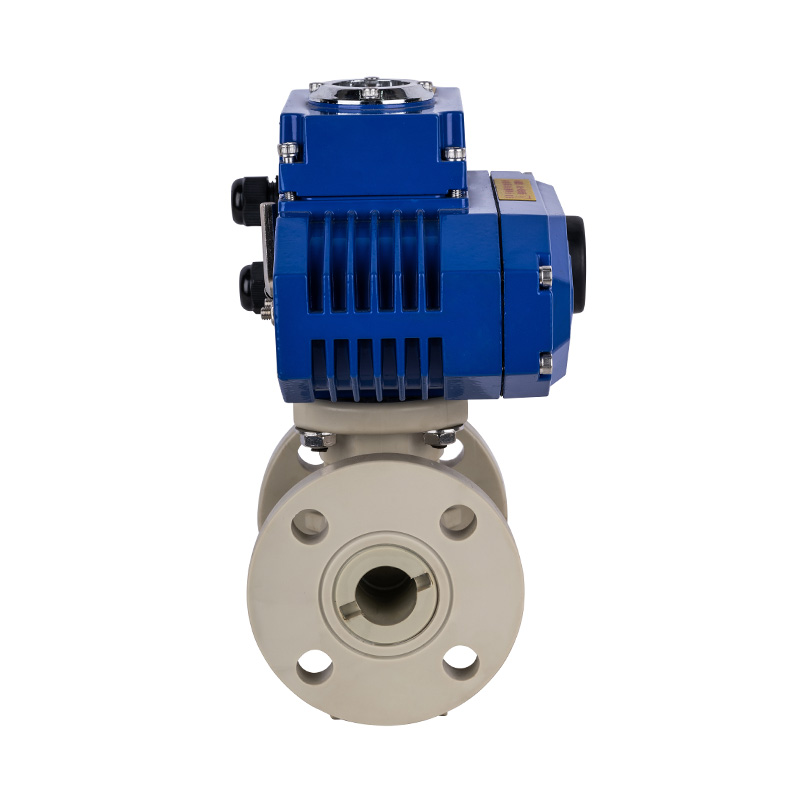 PPH Electric Flanged Ball Valve DN15–DN300Electric-actuated PPH flanged ball valve for corrosive-duty lines, with remote open/close and flow regulation across DN15–DN300.View Product →
Matching the body material to the medium matters as much as the operator. Our note on choosing plastic valves and pipe for corrosive and abrasive duty covers that side of the decision.
The Part Nobody Specifies Until It Breaks
A handle is the cheapest component on a plastic ball valve and the one that decides whether the valve is usable when it matters. Specify it with the same care as the body: a stabilised compound, a bore that matches the stem, a lever length suited to the torque, and a lockout hole wherever crews need one.
The questions we get about handles have not changed much in more than twenty years of making valves, pipe and pumps for corrosive service. They are almost always about fit, meaning the right bore on the right stem, tightened to the right figure. Get those three right and the handle disappears into the background, which is exactly what a good one should do.

 本社: 中国浙江省寧波市北侖区渤海路539号

 +86-18067123177
